

Chumba casino Plinko game
Introduction
I have reviewed enough instant-win and slot-style products to know when a simple concept hides a more demanding play pattern. Chumba casino Plinko is a good example. At first glance, it looks almost too straightforward to deserve a long breakdown: you set a stake, choose a risk profile, drop a ball, and watch it bounce through a field of pegs into a payout slot. That visual simplicity is exactly why many players underestimate it.
In practice, Plinko is not just a casual diversion with random movement on screen. It is a fast, variance-driven format where the entire session can feel stable, frustrating, or explosive depending on settings such as rows and risk level. For some players, that makes it more transparent than a slot. For others, it makes the swings feel harsher because there is nowhere for the math to hide.
That is why this page matters. If you are looking at Chumba casino Plinko and trying to work out whether it is worth your time, the key question is not whether the interface looks fun. The real question is what the game is actually asking from the player: patience, tolerance for dry runs, comfort with uneven results, and a clear understanding that simple visuals do not mean soft volatility.
In this review, I will stay focused on the Plinko format itself: how it works, why it attracts attention, what the rhythm feels like in a real session, where the pressure points are, and who is likely to enjoy it. That is the practical lens that matters most.
What Plinko Is and Why It Draws So Much Attention
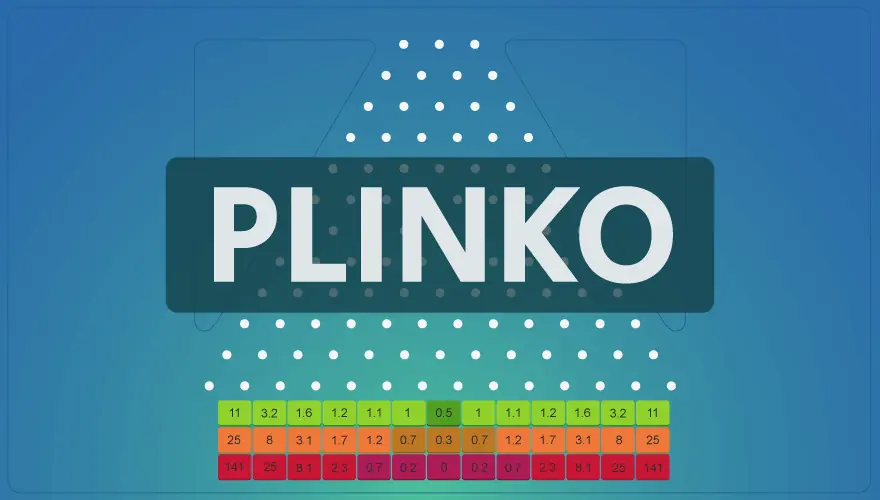
Plinko is built around a single visual event: a ball falls from the top of the board, collides with a series of pins, changes direction repeatedly, and lands in one of several prize buckets at the bottom. The outcome is determined by chance, but the presentation gives the player a strong sense of movement and suspense. You are not waiting for reels to stop or symbols to line up. You are watching a path unfold in real time.
That difference matters more than it may seem. Many casino products deliver randomness behind layers of animation, bonus review for Canadian players rounds, symbol values, and payline structures. Plinko strips that away. The entire appeal is concentrated into a short sequence that is easy to read: release, bounce, drift, land. Even players with little experience can understand the core loop within seconds.
There are three reasons this format became so noticeable: Players who value quick withdrawals will find real timings in Chumba Casino Sweet Bonanza slot practical player guide.
- Immediate readability. You do not need to learn paylines, scatter rules, or feature triggers before starting.
- High emotional compression. The tension is packed into a very short moment, which makes each drop feel self-contained and easy to follow.
- Visible randomness. Even though the result is still governed by the game’s math, the bouncing path creates the impression that you are witnessing chance rather than just receiving an outcome.
That last point is especially important. One of my recurring observations with Plinko is that players often trust visible randomness more than hidden randomness, even when both are equally statistical in nature. Watching the ball zigzag through pegs feels more “honest” than watching a slot reveal symbols, although the underlying unpredictability remains just as real.
On a platform like Chumba casino, Plinko stands out because it does not ask for long setup time. It is one of those formats that can pull attention quickly, especially from players who want direct action without the layered structure of traditional reel-based products.
How the Core Plinko System Actually Works
The board is the center of everything. You select your stake, choose the number of rows if that option is available, set a risk level, and then release the ball. As it hits each peg, it is deflected left or right until it reaches the bottom. The slot where it lands determines the multiplier applied to your stake.
On the surface, that is the whole game. But the practical behavior of Chumba casino Plinko depends on how several variables interact.
| Element | What it changes | Why it matters in practice |
|---|---|---|
| Stake size | The value of each result | Higher bets magnify normal swings and make losing streaks feel sharper |
| Risk level | The payout distribution | Lower settings usually produce more modest outcomes, while higher settings shift value toward rarer top multipliers |
| Row count | The path length and prize layout | More rows often mean a broader spread of possible landing zones and a stronger contrast between common and rare outcomes |
| Drop speed | The session tempo | Fast play can compress results and lead to poor bankroll control if the player stops tracking the flow |
The board is generally structured so that the center slots are easier to hit and therefore pay less, while the outer slots are harder to reach and offer larger multipliers. This creates a bell-shaped tendency in the result distribution. In plain terms, most drops cluster around lower or moderate returns, while the eye-catching prizes sit at the edges and appear much less often.
That is the first practical lesson: the dramatic outcomes shown on the board are not there to suggest balance across all slots. They are there to represent asymmetry. The rarest landing points carry the biggest multipliers precisely because the game does not expect them to hit often.
A second observation that often gets missed: Plinko feels physical, but it should not be interpreted as a skill game. The ball’s movement is part of the presentation. You can watch the route, react to near-misses, and feel as if the ball was “almost there,” yet those emotions do not create influence. This is one of the format’s most effective illusions. It looks tactile, but from the player’s side, it remains a chance-based product.
Why the Session Feels So Engaging Despite the Simple Layout
The engagement in Plinko comes from rhythm, not complexity. The game gives you a short anticipation window, a visible chain of deflections, and an immediate result. That combination makes repetition easy. You can complete many rounds in a short period without feeling like you are sitting through long animations or waiting for a bonus sequence to build. The full picture of payment methods lives in check Chumba Casino poker before registering or depositing, including the less common ones.
This speed is a strength, but it also changes how players experience outcomes. In slots, a poor stretch can be softened by thematic presentation, feature teases, or the sense that something bigger may be building. In Plinko, there is no such cushioning. If the returns are low, you see it clearly and repeatedly. If a strong multiplier lands, the impact is equally direct.
That clarity creates a very specific session profile:
- The game is easy to start and easy to repeat.
- The emotional highs and lows arrive quickly.
- The player receives less narrative distraction than in reel-based formats.
- Bankroll movement can become more obvious, for better or worse.
I would go further and say this is one of the reasons Plinko has become so watchable. It produces compact suspense. Every drop is a miniature event with a clean beginning and end. For players who enjoy immediate feedback, that works extremely well. For players who prefer layered progression, it can feel too bare after a while.
There is also a psychological detail worth noting. In many sessions, the most memorable moments are not the biggest hits but the near-edge drops that almost reach a top multiplier before bouncing back inward. Plinko generates a lot of “almost” drama. That is part of its pull. The board constantly shows how close a better outcome can appear, even when the actual result remains modest.
Understanding Risk Levels, Probability, and Session Volatility
If I had to identify the single most important thing a player should understand before launching Plinko, it would be this: the risk setting is not a cosmetic preference. It fundamentally changes the texture of the session.
Low-risk configurations usually concentrate more of the return profile around smaller multipliers. That tends to produce steadier but less dramatic results. You may see more frequent modest returns, but the ceiling is typically lower. High-risk settings do the opposite. They push more value into rare outcomes, which means many drops can return little while a small number of results carry the session’s upside.
This is where players often misread the format. Because Plinko is easy to understand visually, some assume it is naturally casual or gentle. It is not. Depending on the configuration, it can be one of the more swing-heavy experiences in a casino lobby.
| Risk profile | Typical feel | What a player should expect |
|---|---|---|
| Low | More stable, less dramatic | Frequent smaller results, fewer standout moments, slower emotional swings |
| Medium | Balanced but still uneven | A mix of regular returns and occasional stronger multipliers, though dry runs remain possible |
| High | Sharp and volatile | Long stretches of weak returns can occur before a rare high multiplier changes the picture |
Probability in Plinko should be viewed as distribution, not promise. The board may display attractive multipliers at the edges, but those values do not mean the session is moving toward them. Each drop is its own event. A sequence of poor outcomes does not make a large multiplier “due,” and a strong hit does not mean another one is near.
This is one of the most practical truths about Chumba casino Plinko: the game can create strong pattern-seeking behavior in players because the path is visible. People start reading meaning into left-right movement, recent edge hits, or clusters around the center. In reality, none of that gives a reliable predictive edge. The board encourages interpretation, but the smart approach is to resist that temptation.
What the Real Results Can Look Like Over a Session
A single drop tells you almost nothing. Ten drops tell you very little. Even a short session can be misleading because Plinko is capable of compressing a lot of variance into a small sample. That is why players should think in terms of session behavior rather than isolated highlights.
Here is what that means in practical terms: To understand the wagering rules behind each offer, open withdrawal limits checklist next.
On a conservative setup, you may see many outcomes that soften losses without generating major momentum. The session can feel active and alive, yet the bankroll may still drift downward if the stronger multipliers never arrive. On a high-risk setup, the opposite can happen. The balance may decline quickly for a stretch, then a single outer-slot result can recover a large part of the session or put it ahead.
Neither experience is unusual. They are both built into the structure of the format.
Another detail I think players should keep in mind: Plinko often feels “fair” because every drop is visible, but fairness of presentation is not the same thing as comfort of results. A transparent losing stretch is still a losing stretch. In fact, some players find it more intense because there are no side features to distract from the actual return pattern.
That is why bankroll discipline matters more than many newcomers expect. The speed of play can make moderate stakes accumulate quickly across a session. If you increase the bet while also selecting a sharper risk profile, the game can become expensive far faster than its simple interface suggests.
How Plinko Differs from Slots and Other Casino Game Formats
The easiest comparison is with classic slots, because that is where many players come from. Slots usually combine reels, paylines or ways-to-win systems, symbol values, bonus triggers, free spins, and themed presentation. Their entertainment value often comes from layered progression. You are not just waiting for one result; you are also watching for feature entry, multiplier stacking, symbol expansion, or bonus enhancement.
Plinko removes almost all of that. It offers a shorter and cleaner loop. You do not build toward a feature. You do not track symbol combinations. You do not wait for a bonus game to rescue the session. Instead, each round stands on its own.
Compared with other Chumba Casino games for real money players, the distinction becomes clearer:
- Versus slots: Plinko is more immediate and less thematic, with fewer layers between stake and result.
- Versus roulette: it shares a direct outcome style, but presents chance through motion rather than a wheel and fixed betting fields.
- Versus crash-style products: it is less about timing decisions and more about accepting a pre-set distribution of outcomes.
- Versus table games: it requires less rules knowledge but offers less strategic involvement.
The practical takeaway is simple. Plinko is for players who want short cycles and visible suspense, not for those who need deep feature architecture or decision-heavy play. It occupies a middle ground between pure instant-result products and more elaborate reel games.
Where Plinko Performs Well and Where It Can Frustrate Players
Every format has trade-offs, and Plinko is no exception. Its strengths are real, but they are tied closely to its limitations.
What it does well:
- It is easy to understand from the first round.
- The visual path creates immediate suspense without long delays.
- Risk settings make the experience adjustable.
- The outcome structure is more transparent than in many feature-heavy products.
Where it can disappoint:
- The simplicity can become repetitive for players who enjoy evolving bonus structure.
- High-risk modes can produce harsh stretches with little visible compensation.
- Near-misses can create emotional momentum without improving actual results.
- The fast pace can encourage overplaying if the player treats each drop as harmless.
That last point deserves emphasis. One of the most misleading things about Plinko is how light it feels. The interface is clean, the rounds are short, and the action looks almost playful. But session cost is determined by repetition, not appearance. A game can look casual and still produce serious swings when played quickly.
I would also describe Plinko as unusually honest about what it is. There is no long list of features pretending to add control. What you see is what you are getting: a stake, a board, a distribution curve, and a result. Some players appreciate that directness. Others interpret it as a lack of depth. Both reactions are valid.
Who This Format Suits Best and Who May Prefer Another Style
Chumba casino Plinko is likely to suit players who enjoy concise rounds, clear visual outcomes, and a format where the central tension is easy to follow. If you like seeing the result develop in front of you rather than through spinning reels and layered bonus logic, this style can be very satisfying. Before you make a deposit, it is worth reading Chumba Casino no deposit bonus codes review for the fee and speed details.
It is also a reasonable fit for players who want to experiment with session tone through risk selection. Low and medium settings can make the board feel more measured, while higher settings create a much sharper, more speculative experience.
On the other hand, Plinko may not suit everyone. If you prefer games with strong themes, progression, expanding features, or the sense that a session is building toward a bonus event, the format can feel too stripped down. Likewise, if repeated low returns frustrate you more than they intrigue you, the board’s visible randomness may become irritating rather than engaging.
In short, Plinko tends to work best for players who value clean design and can stay emotionally detached from short-term swings. It is less suitable for players who chase structure, narrative variety, or a feeling of strategic influence.
What to Check Before You Start Playing
Before starting a session, I recommend focusing on a few practical points rather than just pressing drop and reacting in real time.
- Check the risk setting first. Do not treat low, medium, and high as cosmetic labels. They shape the entire session profile.
- Understand the multiplier spread. Large edge values are attractive, but they exist at the low-frequency end of the distribution.
- Set a pace. Fast rounds can distort your sense of total spend if you do not keep track.
- Use a demo or low-stake approach if available. This helps you feel the rhythm before committing more seriously.
- Avoid reading patterns into recent drops. The board invites superstition. That does not mean superstition helps.
If I had to reduce all of that to one sentence, it would be this: treat Plinko as a variance tool, not as a casual toy. The sooner a player understands that, the better their expectations will be.
Final Verdict on Chumba casino Plinko
Chumba casino Plinko offers a very specific kind of casino experience: fast rounds, visible suspense, and a payout model that can shift from relatively steady to highly uneven depending on the chosen settings. Its biggest strength is clarity. You do not need to decode a paytable full of symbols or wait for a bonus round to understand what is happening. The board shows the tension openly, and each drop resolves quickly.
That same clarity is also where caution is needed. Plinko can look harmless because the interface is minimal and the concept is easy to grasp, but the actual session behavior can be demanding. Higher-risk configurations can produce prolonged weak stretches, and even lower-risk play does not guarantee comfort. The game is simple to enter, not necessarily simple to manage.
For players who enjoy short, self-contained rounds and do not need elaborate slot features, Plinko can be a strong fit. For players who want richer progression, deeper structure, or a stronger feeling of control, it may wear thin quickly. That is the honest dividing line.
My overall view is straightforward: Plinko deserves attention not because it is trendy, but because it distills casino randomness into one of its cleanest forms. If you approach it with realistic expectations, understand the role of risk levels, and respect the speed of the format, it can be engaging and surprisingly revealing. It shows exactly how much tension a very simple system can generate when the distribution underneath it is doing the real work.
FAQ
What is Plinko on the official casino site, and what happens when a ball is dropped?
Plinko is a pachinko-style game where a ball drops through a peg field and lands in one of many outcome slots. The slot it lands in determines the multiplier or prize shown for that round. Each drop is an independent round.
Which risk level should be expected from Plinko, and what does volatility mean for this game?
Volatility describes how often the game may return small or large outcomes over time. Higher volatility generally means bigger swings, while lower volatility tends to feel steadier. Checking the game screen for the current volatility label helps set expectations.
How can a player start a Plinko round quickly on the lobby or game section?
Select Plinko from the games list, choose the round stake if that option is shown, then press the drop control to launch the ball. The round ends once the ball settles and the multiplier result appears.
Why might the Plinko game not load or the ball fail to drop, and what troubleshooting steps help?
Start by refreshing the game section and trying a different browser tab or app screen. Log out and log back in if the game remains stuck at loading. Confirm device connectivity and disable any blocking extensions that could interfere with game scripts.
Is Plinko different from live dealer casino tables like roulette or blackjack in terms of experience and limits?
Plinko is a quick online casino game driven by the game engine rather than a live dealer studio. Live casino tables involve table limits and dealer round flow, while Plinko centers on one-ball outcomes and multipliers. Switching between them is possible from the game lobby, but stakes and limits may differ.